How to Run a Successful Spa Business: A Practical Owner's Guide
The global spa market is expanding fast: industry estimates put it at roughly $80–90 billion in 2025–2026, growing at a compound annual rate of around 11% (GMI Insights, 2026). Day and club spas alone account for close to 44% of that revenue (GMI Insights, 2026). That growth is good news, but it also means more competition in most local markets. Below is a practical, no-fluff breakdown of what actually separates a thriving spa from one that's stuck.
1. Define a Clear Market Position Before You Do Anything Else
Every operational decision — pricing, staffing, marketing, even software — gets easier once you know exactly who you serve and why they'd choose you over the spa down the street.
Pick a lane. "We do everything for everyone" is the most common reason spas struggle to fill their calendars. A results-driven med spa, a relaxation-focused day spa, and a fast, affordable express spa are three different businesses with three different pricing models, staff skill sets, and marketing messages. Decide which one you're building.
Know your real competitive set. It's rarely just the spa two blocks away. You're also competing with at-home facial devices, med spa injectable clinics, gyms with recovery suites, and, for relaxation-seekers, simply staying home. Understanding this helps you position on the things you can actually win: expertise, consistency, comfort, or convenience.
Write it down. A one-page positioning statement — target client, core services, price tier, and the one thing you do better than anyone nearby — should guide every hiring and marketing decision that follows.
2. Build a Business Model That Protects Margin
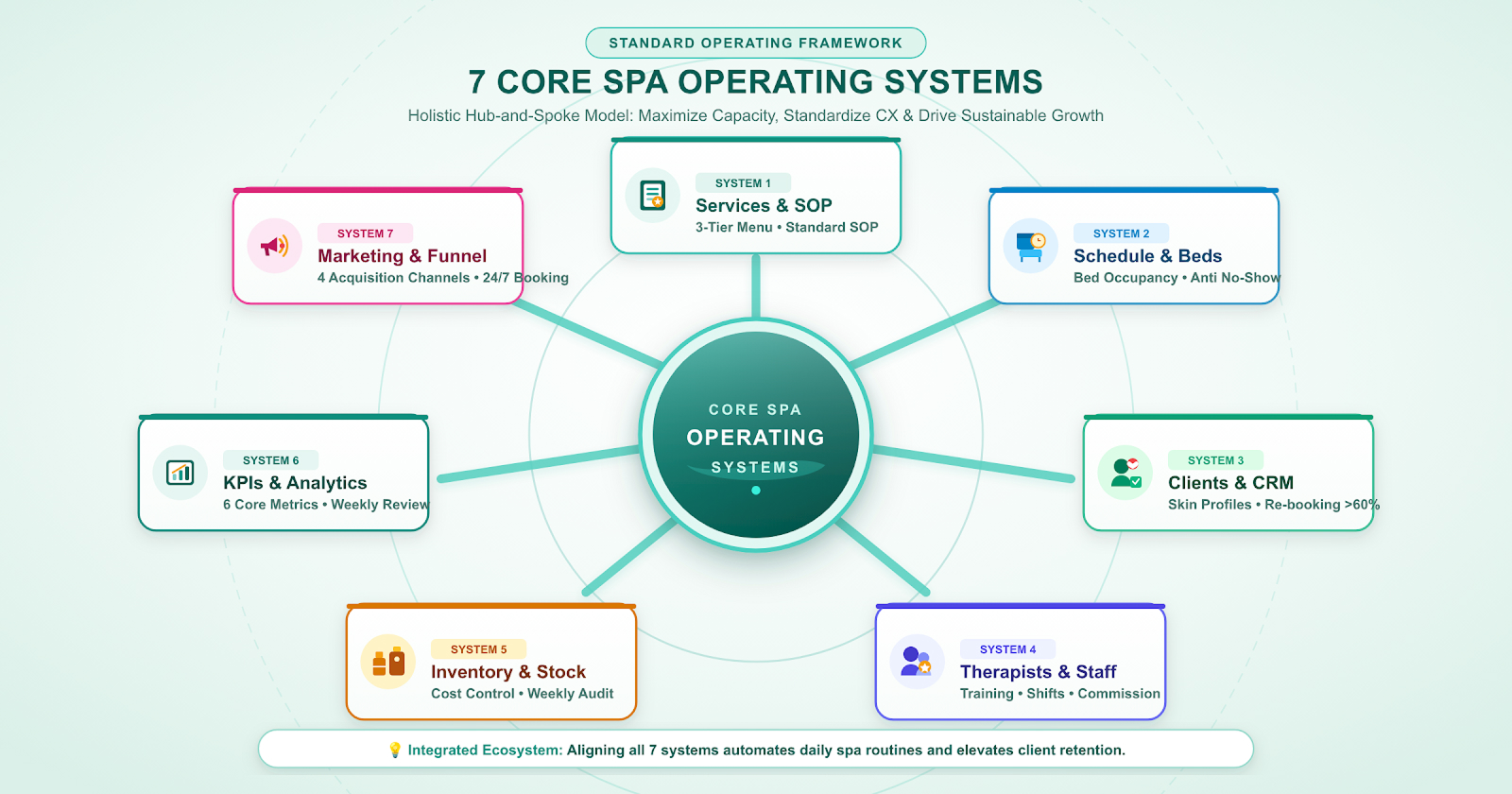
Spas are labor- and space-intensive businesses. Margin discipline has to be built in from day one, not fixed later.
Price for value, not just cost. Calculate the fully loaded cost of each service — therapist time, product cost, room time, laundry, amortized equipment — before setting a price. A common mistake is pricing off a competitor's menu without knowing whether that competitor is actually profitable.
Watch room and chair utilization. A treatment room sitting empty at 2 p.m. on a Tuesday is a fixed cost with no offsetting revenue. Many spas find more profit in filling existing capacity (through smarter scheduling and reminders) than in adding new services.
Diversify revenue without diluting the brand. Retail product sales, memberships, packages, and gift cards all add revenue that doesn't require additional treatment-room hours. Membership and package clients also show up more reliably: non-membership spas lose close to $120 in revenue per no-show, compared with about $46 for membership-based spas, because membership clients are more invested in keeping their appointments (Zenoti, 2025 Beauty & Wellness Benchmark Report).
Protect your calendar with deposits. No-shows and late cancellations are a direct hit to a business with almost no marginal cost to serve one more client. Industry data shows the average no-show rate across salons and spas sits around 3%, with cancellation rates closer to 8%, and med spas running slightly higher at around 5% no-shows (Bookrhub, 2026 No-Show Report; Regulr, 2026). Businesses that require a deposit or card on file at booking see no-show rates fall to roughly 5–7%, versus 12–18% for businesses that don't collect anything up front (Bookrhub, 2026).
3. Hire and Schedule for a Staffing Market That's Genuinely Tight
Staffing is the single biggest constraint most spa owners face right now, and it's a documented, industry-wide problem rather than a local hiring streak.
Understand the shortage you're hiring into. The US alone has an estimated shortage of roughly 29,000 massage practitioners relative to demand (Jennifer Young Training, citing industry workforce data), and close to 40% of massage therapists leave the profession within their first two years, largely due to physical strain and burnout from packed treatment schedules (Jennifer Young Training). If you're struggling to hire and retain therapists, you're not doing something uniquely wrong — you're competing in a genuinely constrained labor market, and it changes how you should schedule.
Schedule to protect therapists, not just to maximize bookings. Practices that routinely book seven or eight hands-on hours a day are, by industry reports, the ones losing therapists fastest to injury and burnout. Building buffer time, capping consecutive hands-on hours, and rotating high-intensity modalities protects the people your business depends on.
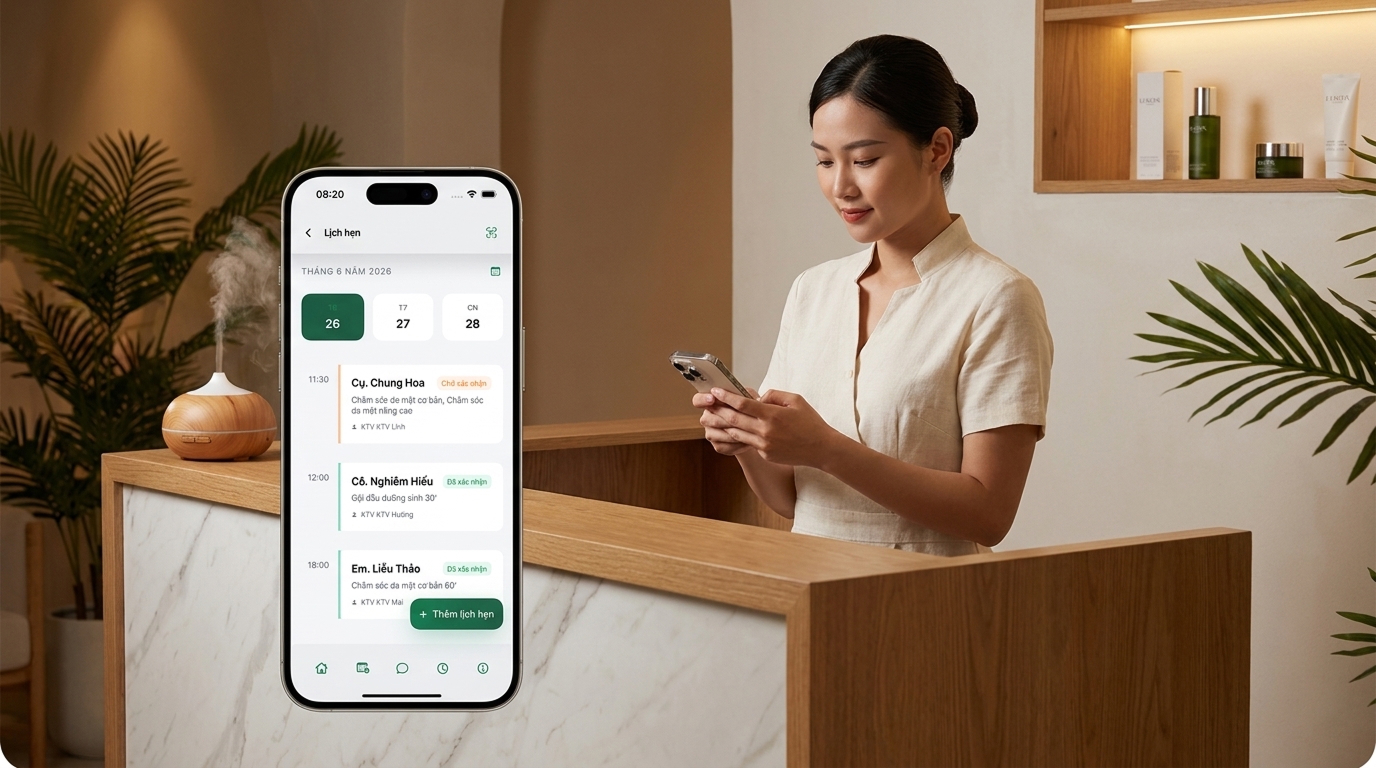
Make scheduling data-driven. Once you're tracking which services, therapists, and time slots actually fill (and which don't), you can build schedules around real demand rather than guesswork — reducing both understaffed peak hours and overstaffed slow ones. Spa management platforms, including spamini.com's scheduling module, are built around this exact problem: matching therapist availability and skill sets to real booking demand so owners aren't rebuilding the calendar by hand every week.
Invest in retention, not just recruiting. Clear commission and tip structures, predictable schedules, ongoing training, and a genuine path for senior therapists (lead therapist, trainer, spa director) all reduce the cost of constant rehiring — which, in a tight labor market, is often more expensive than a modest pay increase.
4. Systemize Bookings, Client Records, and Inventory
As a spa grows past a handful of therapists, the systems that worked on a whiteboard or a spreadsheet start to break down — double-bookings, missed follow-ups, and product stockouts multiply quietly until they show up as lost revenue.
Move booking online, deliberately. The average spa currently books about 30% of appointments online, but top-earning spas book closer to 59% — nearly double (Zenoti, 2025). Higher online booking rates correlate directly with lower no-show rates, since online booking naturally pairs with automated reminders and upfront deposit collection. If most of your bookings still come through phone calls and walk-ins, that's a clear, measurable growth lever — not a nice-to-have.
Centralize client history. A client's preferences, allergies, past treatments, product purchases, and consultation notes shouldn't live in a therapist's personal notebook. A shared CRM means any staff member can deliver a consistent, personalized experience, and it's the foundation for the kind of targeted, relevant marketing that actually drives repeat visits (rather than generic blast promotions everyone ignores).
Track inventory like it's revenue, because it is. Retail products and treatment supplies tie up cash. Manual inventory tracking in a busy spa tends to fall behind, leading to both stockouts on popular retail items and forgotten expiring product. Automated, POS-linked inventory tracking — a core function of platforms like spamini.com alongside booking and CRM — keeps this from becoming a monthly fire drill.
Report on the metrics that predict problems early. Rebooking rate, average ticket, retail attach rate, therapist utilization, and no-show rate are leading indicators — they move weeks before revenue does. A spa that only looks at monthly revenue is always reacting a month late.
5. Build a Retention Engine — It's Cheaper and More Reliable Than Constant Acquisition
Retention isn't a marketing tactic bolted onto the business; for most spas, it's the business.
Know your real number. A client retention rate above roughly 70% after the second visit is considered strong in the spa and med spa industry (Zenoti, 2025; Jericommerce, 2026 Spa & Salon Retention Statistics). If you don't know your own retention rate, that's the first thing to fix — you can't improve what you're not measuring.
Recognize how concentrated your revenue already is. Roughly 42% of clients who visit more than once a year — your loyal core — generate about 80% of total revenue in a typical spa (Zenoti, 2025). That means a retention dip of even a few points can hurt more than a slow month of new-client marketing helps.
Personalize outreach using real client data. Spas that use client history to personalize recommendations and follow-ups — rather than sending the same generic offer to everyone — have reported retention rates up to 30% higher than those using generic outreach (Zenoti, 2025). This is only possible if client data is centralized and accessible, which loops back to the CRM point above.
Structured loyalty programs work. One documented case saw a med spa's retention rise from 54% to 78% within a year of launching a structured loyalty program (Jericommerce, 2026). More broadly, spas with loyalty programs have grown revenue at roughly 14% year over year, compared with about 7% for the industry overall (Jericommerce, 2026). A loyalty program doesn't need to be complex to work — a simple points-per-visit or prepaid-package structure, tracked automatically, is often enough to start.
Rebook before the client leaves the building. The single highest-leverage retention habit is asking every client to book their next visit before they walk out the door, supported by automated reminder texts or emails as the date approaches.
6. Stay Compliant and Keep the Business Safe
None of the growth strategies above matter if a licensing, safety, or data issue shuts the business down or damages its reputation.
Keep licenses and insurance current for the business, the facility, and every practitioner — requirements vary by state, province, or country, so build a renewal calendar rather than relying on memory.
Follow sanitation and treatment protocols precisely, especially for any modality involving skin-penetrating tools, injectables, or shared equipment; regulators and insurers increasingly expect documented, auditable procedures.
Protect client data. Health-adjacent information (skin conditions, medical history for certain treatments, payment details) carries real privacy obligations under regimes like GDPR in the EU/UK or state privacy laws in the US. A centralized system with proper access controls is generally safer than paper files or shared spreadsheets.
7. Review the Numbers on a Regular Rhythm
A spa that's "doing fine" by feel can still be losing money quietly. Build a simple review rhythm:
- Weekly: bookings vs. capacity, no-show rate, cash position.
- Monthly: revenue by service line, retail attach rate, retention/rebooking rate, staff utilization.
- Quarterly: pricing review, service-menu profitability, marketing ROI by channel.
Owners who review these numbers on a set schedule catch small problems — a slipping rebooking rate, a therapist's utilization dropping, a retail category quietly going stale — while they're still cheap to fix.
The Bottom Line
A successful spa business isn't built on one big decision; it's built on getting positioning, pricing, staffing, systems, and retention right at the same time, and then reviewing performance often enough to adjust quickly. The spas growing fastest right now aren't necessarily the ones with the fanciest treatment menu — they're the ones with the least friction between a client wanting an appointment and that appointment happening, showing up, and leading to a rebooking. Getting the operational basics — booking, scheduling, client records, and reporting — out of spreadsheets and into one connected system, whether that's spamini.com or another platform built for spas, is usually the fastest way to free up the time needed to focus on the client experience itself.
Frequently Asked Questions
What does it take to run a successful spa business? Running a successful spa business requires a clear market position, margin-aware pricing, reliable staffing and scheduling, centralized client and inventory data, and a deliberate client retention strategy — reviewed on a regular schedule rather than set up once and left alone.
How much revenue does a typical day spa make? Day and club spas collectively account for close to 44% of total 2025 global spa market revenue, within an overall spa market estimated at roughly $80–90 billion in 2025–2026 (GMI Insights, 2026). Individual spa revenue varies widely by location, service mix, and capacity, so national averages are less useful than tracking your own room utilization and average ticket over time.
What is a good client retention rate for a spa? A retention rate above roughly 70% after a client's second visit is generally considered strong in the spa and med spa industry (Zenoti, 2025). Since a small core of repeat clients typically drives the large majority of revenue, small improvements in retention tend to have an outsized impact on profitability.
How can a spa reduce no-shows? Requiring a deposit or card on file at booking is one of the most effective levers: businesses that do this see no-show rates around 5–7%, compared with 12–18% for those that collect nothing up front (Bookrhub, 2026 No-Show Report). Moving more bookings online and pairing them with automated reminders also reduces no-shows, since higher online booking rates consistently correlate with lower no-show rates (Zenoti, 2025).
Why is spa staff turnover so high, and what can owners do about it? The industry faces a genuine labor shortage — an estimated 29,000-practitioner shortfall in massage therapy alone in the US — and close to 40% of therapists leave within their first two years, often due to burnout from packed hands-on schedules (Jennifer Young Training). Owners can improve retention by capping consecutive hands-on hours, offering clear career paths, and using scheduling data to avoid overbooking individual therapists.
Do spas need dedicated management software to grow? Not strictly at a very small scale, but the operational load of manual scheduling, paper client records, and spreadsheet inventory tracking tends to become the limiting factor as a spa adds staff and locations. Centralizing booking, staff scheduling, client CRM, and inventory in one system is a common step spas take once manual coordination starts costing more time than it saves.